
Evolution Gaming Stock Deep Dive: The House Always Wins?
Is Evolution Gaming Stock Worth Owning? EVO/EVVTY Stock

What is Evolution?
Most likely, you have seen, encountered, or used an Evolution Gaming product. Evolution provides the software and live-streaming infrastructure that allows major platforms to offer games to their players. They’re known for streaming classic casino games—like live roulette, blackjack, and baccarat—in real time, with professional dealers operating out of high-tech studios.
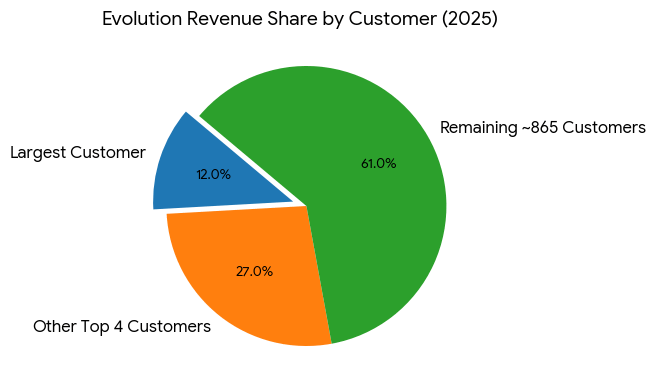
Their revenue primarily comes from monthly commission fees based on a percentage of the winnings generated via their software. Evolution operates over 700 live tables globally, broadcasting 24/7 in 15 different languages. At the end of 2025, Evolution served approximately 870 customers, primarily licensed online casino operators. Their customer base is characterized by relatively high concentration, though diversification has improved over the last year, as the top five customers represented 39% of total revenue in 2025, down from 46% in 2024.
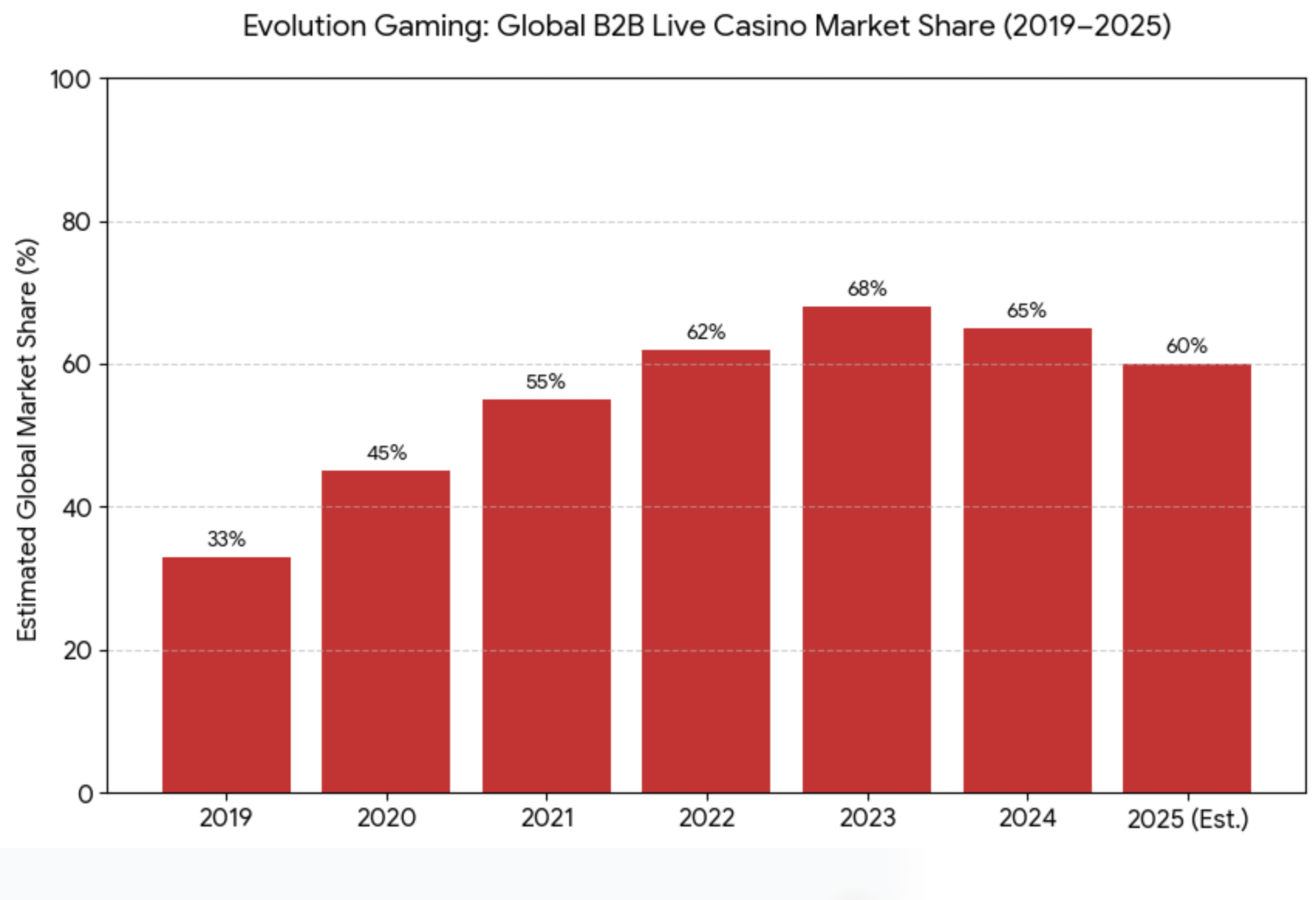
As of early 2026, Evolution Gaming maintains a dominant 60% global market share in the B2B live casino segment. Evolution maintains its moat through the complexity of operations and the high cost and barriers to entry in the live casino business. Evolution’s massive player base allows it to invest significantly more in game quality and studio technology than rivals, as these fixed costs are spread over a much larger revenue stream.
Evolution’s product innovation and creation also makes it a distinct company. In 2025 alone, the company launched over 113 new games to refresh its portfolio and maintain player engagement. Going forward, the company will also have a significant advantage moving into regulated markets from unregulated ones. While this has cost and caused Evolution a decline in revenue, handling complex compliance laws in 16+ jurisdictions creates a “regulatory moat” that smaller, less-capitalized suppliers struggle to cross.
History
Evolution Gaming was founded in 2006 by Jens von Bahr, Fredrik Österberg, and Richard Hadida. Evolution launched its 100th live table in 2013, becoming the largest single-site casino operation in Europe. They pioneered the Live Game Show category with Dream Catcher (2017) and Monopoly Live (2019).
In 2020–2022, they entered a phase of aggressive expansion as they diversified from live games into online slots via acquisitions. Most notably, NetEnt & Red Tiger Gaming, which was a $2.1 billion acquisition, and Big Time Gaming, a €450 million deal. As a result of this, the stock traded near $200 a share. Evolution saw revenue growth ranging from 60–90%, driven by increased demand during the pandemic as more people moved to online gambling. The company maintained exceptional profitability, with net profit margins often exceeding 50% and EBITDA margins near 66–69%.
Evolution aggressively expanded into newly regulated U.S. states, opening live studios and capturing market share.
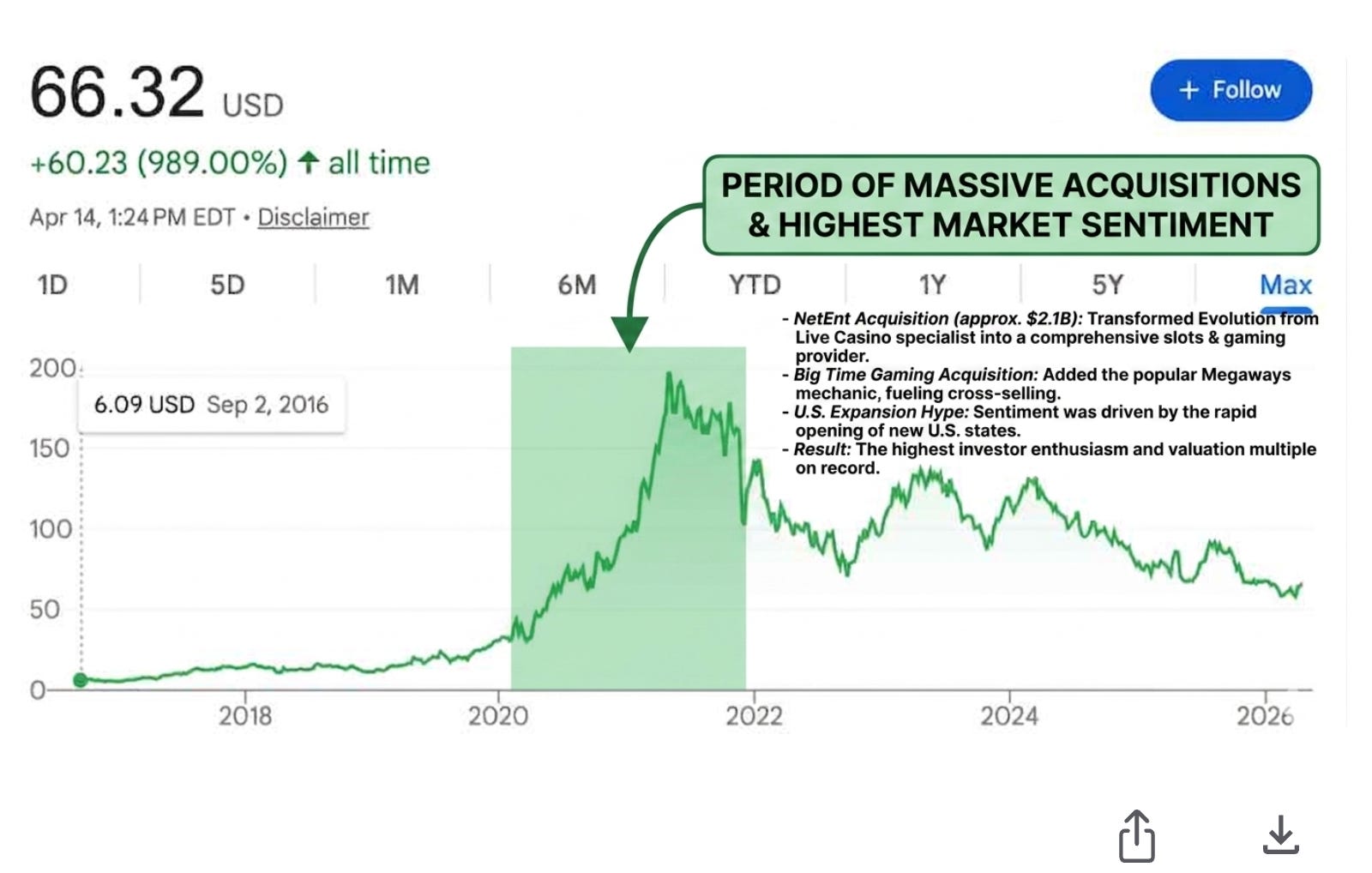
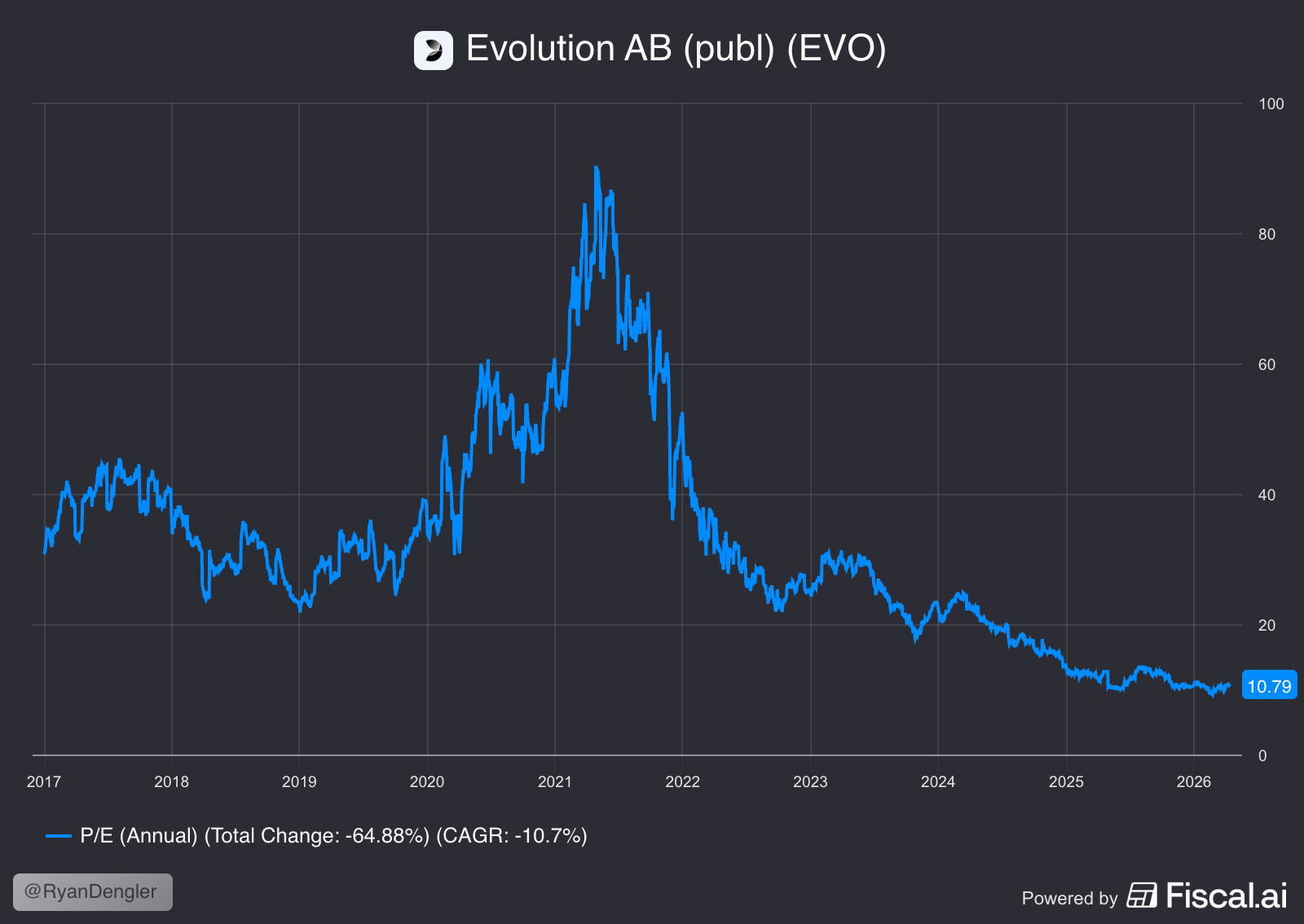
Since 2024, the stock has seen a different story, down roughly 40%. During periods of peak stock performance in 2021, the stock was trading at P/E multiples pushing 90x. Evolution Gaming was treated as a hype gaming stock; today I view it more as a long-term compounder and value play.
Evolution has dealt with a constant amount of issues plaguing its business, most notably moving from unregulated markets to regulated markets. This move significantly reduced revenue from “grey-market” (unregulated) channels, with channelization dropping as low as 50% in some countries. Evolution has also dealt with piracy and cyberattacks in its Asian market (38% of 2025 total revenue). Unauthorized parties scraped live streams and rebroadcast them to unlicensed operators, bypassing commission fees. Aggressive countermeasures inadvertently blocked legitimate players, causing a 10% sequential revenue decline in Asia during Q3 2025.
The company has also been in the midst of court battles. Evolution faced a high-profile “smear campaign” involving a defamatory report by private intelligence firm Black Cube, later revealed to be commissioned by competitor Playtech.
Throughout this period of struggle, Evolution investors have typically been rewarded with a generous annual dividend payout, yielding over 5%. This year, the board decided not to pay out the dividend, choosing instead to buy back shares at these suppressed valuations. I’ve written about this already, but I think that is huge.
Growth of Online Gaming
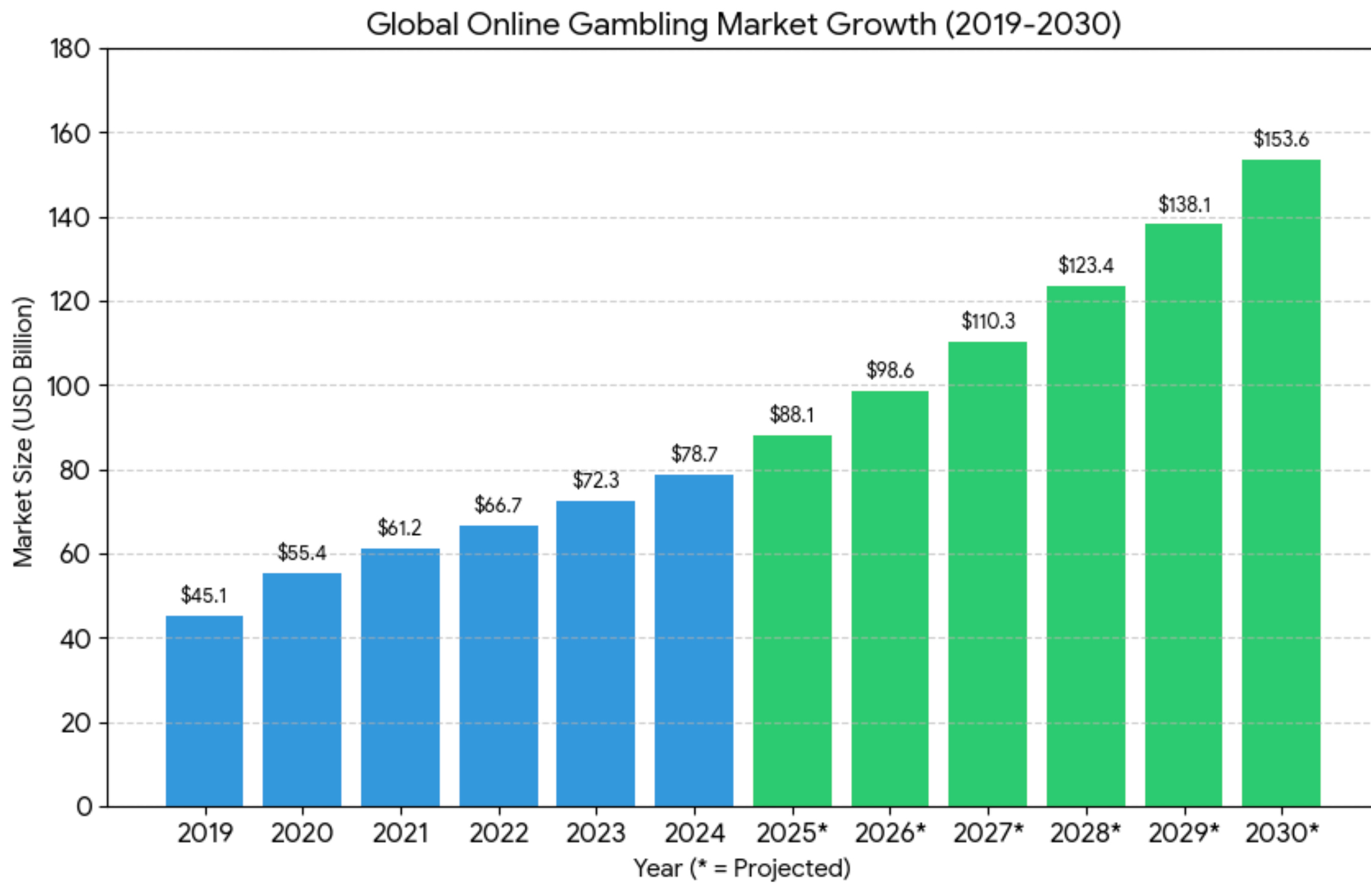
First of all, you need to take a look at the industry and business Evolution Gaming is in and has a dominant market share over. Gaming is a $200 billion global industry, now significantly larger than the film and music industries combined. Most importantly, gaming is more accessible than ever and more addictive than ever. The global online gambling market is expanding rapidly, valued at approximately $78.66 billion in 2024 and projected to nearly double to $153.57 billion by 2030.
Some major key growth drivers for this are mobile gaming, as mobile devices now account for over 80% of wagers in mature markets. Diversification of games balances out year-round gaming when sports are not in season. Technological and AI growth in gaming provides a more personalized experience for players.
Live dealer games (which Evolution specializes in) are the fastest-growing segment in the online casino industry, projected to grow at an 11.83% CAGR through 2031. This growth is driven by the demand for authenticity, social interaction, and significant technological upgrades that can help bridge the gap between digital and physical gambling.
Whether you like it or not, gambling is extremely addictive. During a mild or medium recession, online gaming companies could hold up well. Modern online gambling and sports betting are better positioned for recessions than traditional land-based casinos because they eliminate the need for travel and lodging costs. Even now, as energy prices rise, you could see fewer people driving and traveling to casinos and opting to play online. In 2023, U.S. sports betting revenue grew by 44.5% despite economic uncertainty, reaching a record $10.92 billion, according to reports from the American Gaming Association.
.
Evolution’s Moat
